Why cheap epoxy tables turn yellow.
A resin table that was water-clear in the showroom can be the colour of weak tea three summers later. It is not dirt and it does not polish out. It is the material changing — and most of the reasons are decided before the table is sold.
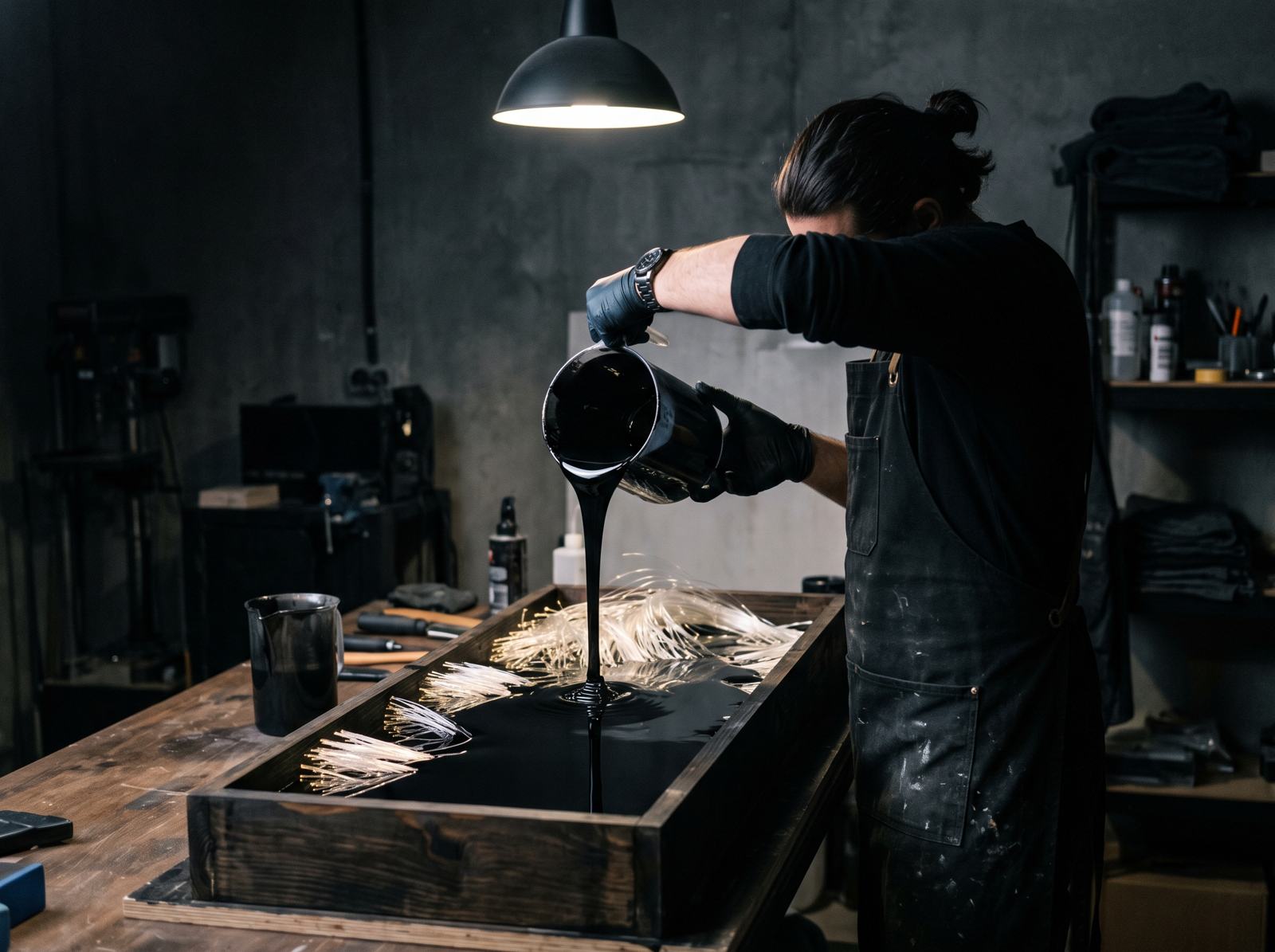
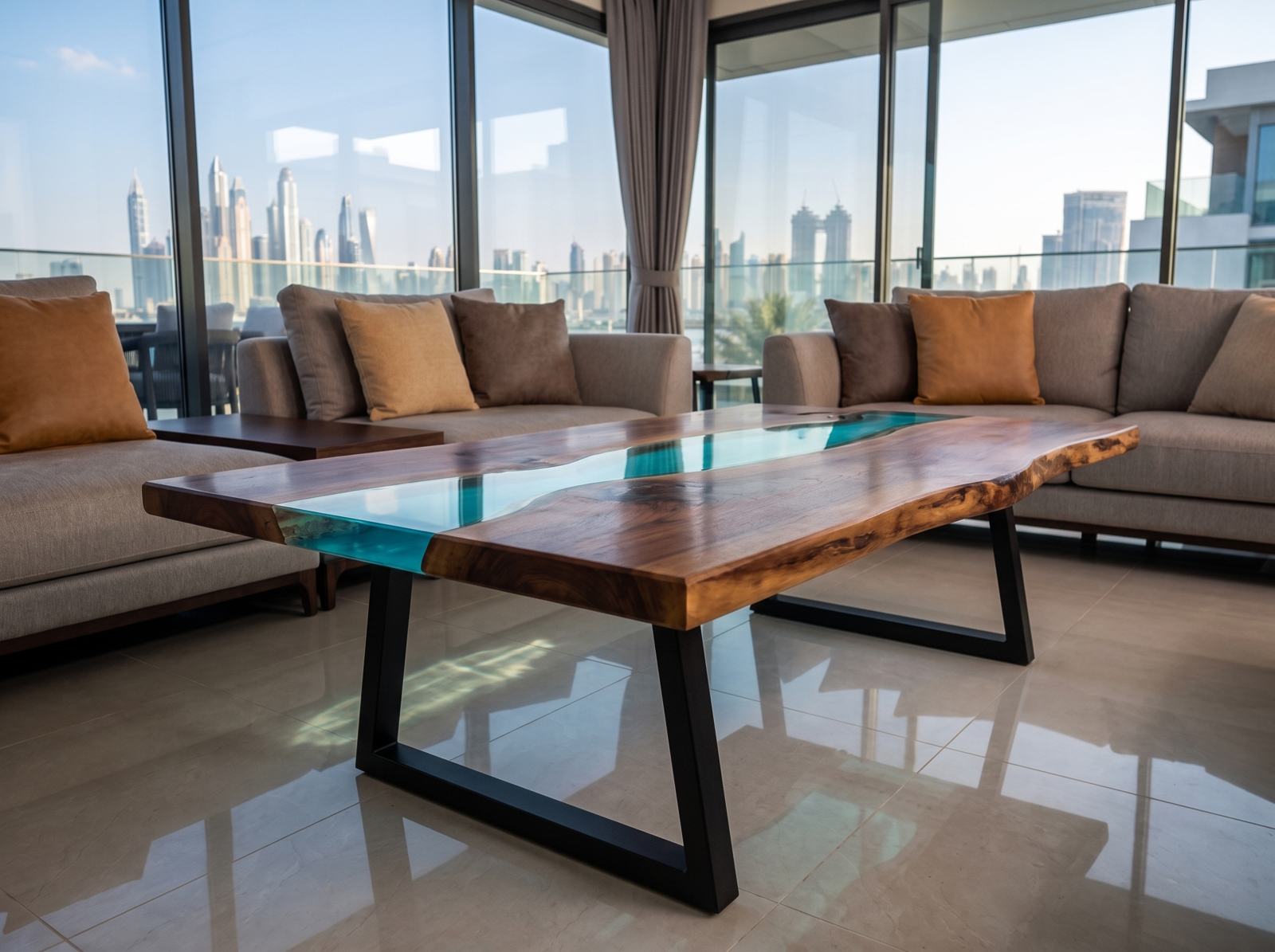
A change in the material, not a stain on it.
Most table resins are epoxies built on bisphenol A. That chemistry is strong, hard and takes a fine polish, which is why it is used. It also carries ring-shaped structures that, under light and heat, slowly rearrange into new ones that absorb blue light. Take blue out of white light and what reaches the eye looks yellow.
So the yellow is inside the resin, not on top of it. Cleaning does nothing. Where the change is only at the surface, the top can be sanded back and refinished; where it runs through a deep pour, it stays.
Every epoxy does this to some degree, given enough light and enough years. What separates a table that yellows in two summers from one that holds its colour for much longer is how much of the problem was designed out at the start.
Four reasons, most of them made in the workshop.
Sunlight gets the blame. It is the main trigger, but three of the four causes are settled before the table ever meets a window.
1. Ultraviolet light
The ultraviolet part of daylight drives the reaction. Direct sun is the fastest route, but a bright room is not safe by default: window glass stops part of the ultraviolet, not all of it. In the Gulf, where many rooms are glazed floor to ceiling, a table can sit in strong light for hours a day without anyone thinking of it as "in the sun".
2. Heat in a thick pour
Epoxy gives off heat as it cures, and the deeper the pour, the less of that heat can escape. A river several centimetres deep, poured in one go with a resin designed for thin coats, can run hot enough in the centre to discolour before any light reaches it — and to crack or cloud as well. The fix is a resin rated for the depth, or several thinner layers with time between them. Both cost more: slower resin, more days on the bench.
3. The resin and hardener chosen
Resins differ. Some are sold with ultraviolet absorbers and light stabilisers added; some have none. Some hardeners are known to yellow faster than others. A hardener that has stood open too long can darken in the tin before it is ever mixed. None of this shows on the day of delivery. All of it shows later.
4. Heat in daily life
A table beside a heater vent, under a hot lamp or used as a stand for hot dishes is being aged on purpose. Sustained heat speeds the same chemistry that light starts.
The savings sit exactly where the yellowing starts.
Look at where a low price comes from. A general-purpose resin instead of one made for deep casting. One thick pour instead of several thin ones. A faster cure to free the bench for the next order. No time spent on a protective top layer. Each of these saves money on the day, and each one is a cause from the list above.
That is why two tables that look identical in a photograph can age so differently. The difference is not visible in a listing; it is visible in the second summer. A quote far below the others is worth a slower look, not a faster yes.
A stabilised resin is not a guarantee either. Absorbers and stabilisers slow the change; they do not stop it. No epoxy stays perfectly clear forever in direct sun, and a maker who says otherwise is selling, not explaining.
Clear resin shows it first.
A faint yellow tint is obvious in water-clear resin and in white or pale blue pours, because there is nothing else in them for the eye to read. In deep, heavily pigmented colours the same change is far harder to see, and in black it is hidden by the colour itself.
This is worth knowing when choosing a design for a bright room. A river of clear resin in a sunlit corner asks more of the material than a dark surface does. It does not mean clear resin is a mistake — only that where the table stands matters more for one than for the other.
Our own work covers both. Nebula is held in a single slow pour of black resin. Rivière divides two walnut slabs with a river of clear resin. Océan is built up in six layers to draw sand, shallows and surf. When you order, ask us where in your room each one should stand — we would rather have that conversation before the drawing than after delivery.
Living with resin in strong light.
Most of what an owner can do is about placement. Keep a clear-resin table out of the patch of floor that the sun crosses each afternoon. Sheer curtains or a film on the glass reduce what reaches it. Do not use the surface as a trivet for hot dishes, and keep it away from heater outlets and hot lamps.
Clean with a soft cloth and mild soap and water; strong solvents and abrasive pads dull the polish long before light changes the colour. If an older table has yellowed only at the surface, a workshop can usually sand it back through the grades and refinish it. If the colour runs deep into the pour, refinishing will not bring the clarity back.
Four questions about the yellow.
The full list of what to ask before paying a deposit is on our resin table page. These four are the ones about colour.
Which resin, and is it made for this depth?
A maker should name the type and say whether it is rated for the thickness of your pour. "Good quality resin" is not an answer.
One pour or several?
Either can be right. What matters is that the maker can explain why — and that the answer matches the resin chosen.
What protects the top?
Ask whether the resin carries light stabilisers and whether the surface has a protective finish, and what that finish needs over the years.
What should I expect in this room?
The honest answer depends on the light where the table will stand. A maker who asks to see the room is taking the question seriously.
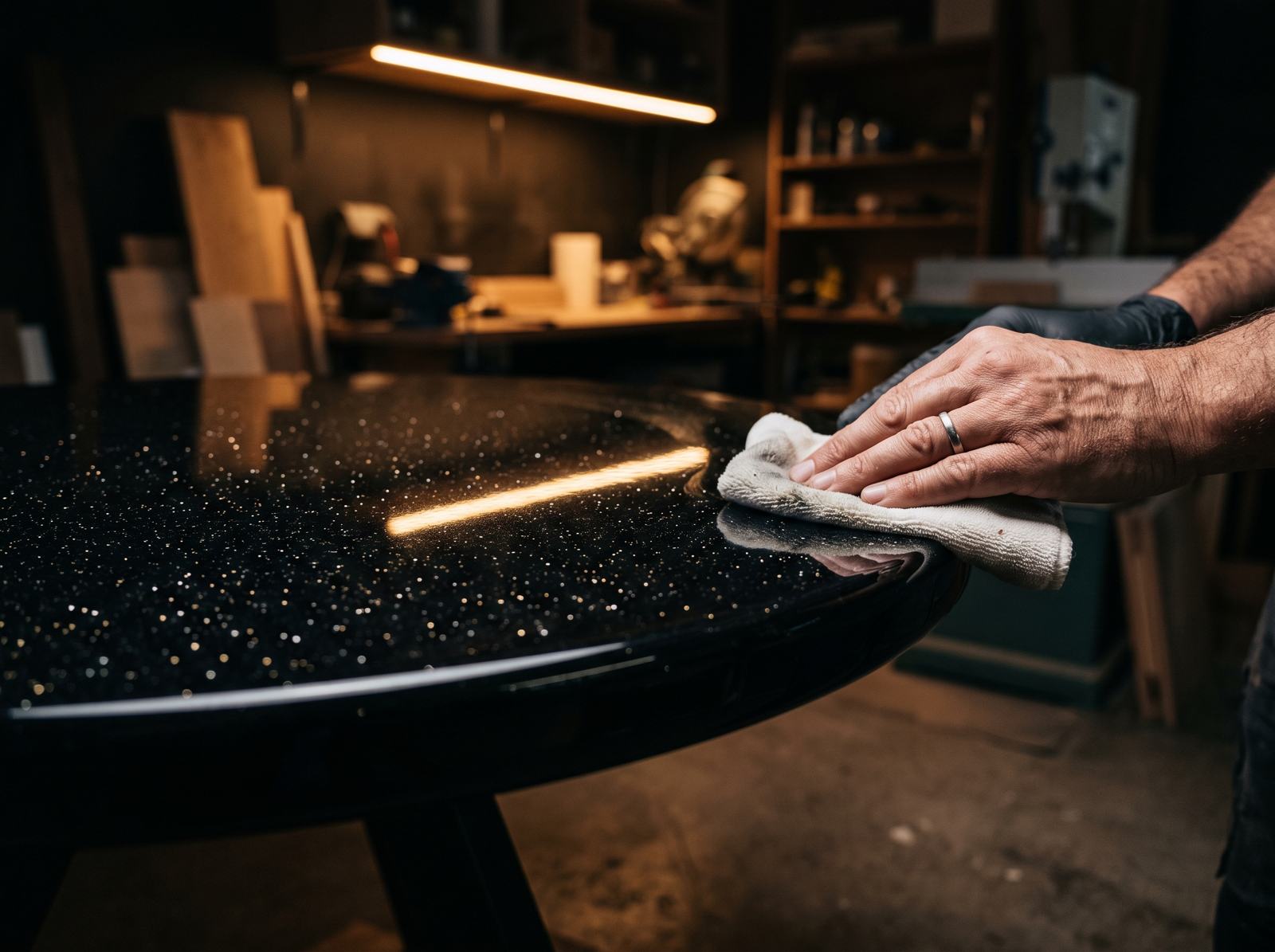
Resin that does something after dark
We make resin tables with optical fibre set by hand under the surface, so they stay quiet by day and open in the evening. Each takes about one hundred and twenty hours, from the drawing to a full night of running in the atelier before it leaves.
- Nebula
- Black resin · 700 stars · from AED 11,000
- Rivière
- Walnut and clear resin · from AED 9,000
- Océan
- Six poured layers · from AED 8,500
- Tawla
- Backgammon in walnut, brass, resin · from AED 7,500
- Lead time
- From 4 weeks
- UAE delivery
- Included, with installation